zondag 2 november 2025

Zo buiten in de omgeving zo binnen in ons lichaam


The nature extinction crisis is mirrored by one in our own bodies. Both have huge implications for health

Modern life is waging a war against ecosystems around us and inside us. Keeping our own microbes healthy is another reason to demand action to preserve the natural world
Human bodies are like cities, teeming with microcitizens – vast communities of viruses, fungi and bacteria that live all over our skin and inside us. Unsung public servants help us digest food, regulate our immune system, defend against pathogens, and keep hormones in check. Together, they make up what we call the human microbiome.
Most people have probably heard of the gut microbiome, but different microbes thrive all over our bodies – in our nostrils, on our feet, in our eyes. They are slightly different, like boroughs are composed of different communities of people. Ninety per cent of cells in our body are microbes, and “clouds” of bacteria come off someone’s body as they enter a room. We are all walking ecosystems, picking up and shedding material as we move through life.
Modern life is waging a war against ecosystems inside us and surrounding us, however. When people think about the nature crisis they probably think about vanishing rainforests or species going extinct, but there is another, hidden extinction happening at a microscopic level. At the same time we are losing species from our planet, we are also losing them from within our own bodies – with huge implications for human health.
“What’s happening inside our own bodies is kind of mirroring what’s happening at a global ecosystem level,” says Anastasia Theodosiou from the school of infection and immunity at the University of Glasgow. “We are increasingly thinking about it as an ecological narrative.”
There is already plenty of evidence that the outdoors is good for us: better physical health, cleaner air, less exposure to extreme heat. But a growing body of research shows the surprising way that not all green space is created equal: the diversity of life that surrounds us is linked to our own health.
Sometimes researchers refer to this as the outer and inner layers of biodiversity. The greater the richness of species surrounding us, the more healthy microbes make their way to our bodies.
Across urban environments, there are higher rates of inflammatory disorders, including allergies, asthma and type 1 diabetes. Fewer people today die of infectious diseases, but autoimmune diseases have increased, and “this is hypothesised to be related to the loss of microbes”, says Ina Schuppe Koistinen, an associate professor at the Karolinska Institute in Sweden. This idea is called the “biodiversity hypothesis” and it came about thanks to the iron curtain.
In the 1980s, a team of researchers looked at differences in allergies between people living in the Finnish and Russian Karelia, who were genetically related. The Russian side was part of the Soviet Union with a subsistence economy, while the Finnish side had urbanised. The number of people with allergies was significantly higher in Finland, while in Russia, asthma was rare and pollen and food allergies almost nonexistent.
The Karelia Allergy Study was the first to link less exposure to nature to an increase in health problems. Fast forward to now and our disconnection from nature has become more acute. Deforestation is continuing at an alarming rate, with more than 8m hectares (20m acres) destroyed last year. By 2050, about 70% of the global population is expected to live in urban areas. The reduction in contact with nature has negative health impacts, including weaker immune systems and increased rates of asthma and anxiety.
The destruction of the natural world has also become the biggest driver of infectious disease outbreaks, as habitat loss forces humans and wild animals into contact. Research published last month concluded that preserving Amazonian forests would protect millions from disease.
However, just as these human and ecosystem losses are happening in tandem, so the solutions work together too. Last month, a sweeping review of 1,550 studies found that taking action for biodiversity in cities had significant, wide-ranging benefits: better physical and mental health, healthier childhood development, stronger social connections, and less exposure to extreme heat, air pollution and noise pollution.
“The key take-home points are that if you take action for biodiversity in cities (through tree planting, or enhancing habitat in parks, or creating greenways), these actions will also likely yield benefits to human health,” says Erica Spotswood, a senior scientist at the San Francisco Estuary Institute and lead author of the paper published in the journal People and Nature.
“The potential for biodiversity and human health to benefit from taking action to green cities is huge,” says Spotswood.
Often, when we increase people’s encounters with nature, the results are immediate. An amazing study from Finland showed that just one month of growing plants boosted skin bacteria and the body’s immune response. It was not the act of gardening that was important but contact with healthy, biodiverse soils.
Research on the microbiome is proof of how intertwined our bodies are with the natural world. Every mouthful of food, the air we breathe and things we touch connects these two worlds. The desire to keep our own microcitizens healthy is another reason for people to demand we live more nature-rich lives, and take urgent action to preserve a thriving natural world.
bron: the Guardian.org, 31.10.2025

zaterdag 1 november 2025

Mensen houden van de voorkant en ontkennen de achterkant....Mariët Meester

"De metafoor van het menselijke uitlaatgas is helemaal zo gek nog niet. Met de winden die gepaard gaan met het verteringsproces van één mens, kan volgens de auteur van Het ultieme schetenboek (2006), filosoof en godsdienstwetenschapper Bart Lauvrijs, dagelijks een ballon worden gevuld. Het verteringsproces van vliegtuigen, en van een auto als de onze, mag daar best mee vergeleken worden: ook die komen alleen vooruit wanneer ze worden gevoed met een product van organische oorsprong, waarna er verbrandingsgassen verschijnen op een plek die de gebruiker niet ziet of ruikt. Mensen houden van de voorkant en ontkennen de achterkant, je zou het haast een natuurwet kunnen noemen. Wanneer je niet direct de nadelen ervaart, zal het allemaal vast wel meevallen.


vermoed ik dat ieder individu een beperkte hoeveelheid wilskracht ter beschikking heeft. En dan bedoel ik wilskracht zoals Immanuel Kant die ongeveer heeft gedefinieerd: de kracht om in vrijheid beslissingen te nemen die ook voor anderen gunstig kunnen zijn. Die beperkte hoeveelheid moet je, lijkt mij, bewaren voor de belangrijke kwesties. Om niet in de verleiding te komen ‘troep’ te kopen, haal ik daarom iedere week een papieren tas die door anderen is gevuld met onbespoten groenten en fruit, zodat ik mijn reservoirtje wilskracht niet hoef aan te spreken om te bedenken wat we gaan eten. Bij producten die incidenteel nodig zijn, zoals verf of tafelzeil, blijkt de wilskracht alweer verbruikt.


.......Erich Fromm, de filosoof en psychoanalyticus, heeft er in 1976 over geschreven in zijn boek Een kwestie van hebben of zijn. Hij legt uit dat het streven naar een ‘goede’ leefwijze vroeger de vervulling van een religieuze of ethische eis was. Dat geldt nu niet meer, voor het eerst in de geschiedenis heeft dat streven te maken met de fysieke overlevingskansen van de mensheid." 


uitspraken uit artikel in nrc vandaag

https://www.nrc.nl/nieuws/2025/10/31/ik-wil-wel-duurzamer-leven-maar-a4909934#/krant/2025/11/01/#308

vrijdag 31 oktober 2025

magie tegen invasieve vernietigers


Patricia Crowther, known as UK’s oldest witch, dies aged 97

This article is more than 1 month old

Wiccan high priestess’s 1970s BBC radio series is credited with helping to popularise modern witchcraft

Patricia Crowther, known as the UK’s oldest witch, has died at the age of 97.

Crowther was a follower of the Wicca pagan religion, developed by Gerald Gardner, who in the 1950s took over a witchcraft museum on the Isle of Man and is credited with rescuing the practice from obscurity.

She was known as a “high priestess” and in the 1970s she and her husband, Arnold Crowther, co-created A Spell of Witchcraft, a BBC Radio Sheffield series that is credited with introducing modern witchcraft to a wider audience.

Crowther is described as having ‘ensured that witchcraft remained vibrant, accessible and present in modern times’. Photograph: Channel 4

The radio programme explored the history and folklore of witchcraft and presented elements of a local coven’s activities and practices within the community.

Prior to becoming an occultist, Crowther was a professional entertainer and dancer woking in theatre. She also performed a puppet and magic show for children.

In an interview with the Guardian in the late 1990s, Crowther said her husband had taken part in “operation cone of power”, a ritual to stop Britain being invaded. “Hitler was expected on our shores at any time,” she said. “They did not throw white powder but worked in the New Forest, chanting: ‘You cannot cross the sea / Not able to come,’ repeated over and over and raising the power through the dance.

“Historians say there were only two things that stopped Hitler coming: one was the Battle of Britain and the other was that he changed his mind. He said: ‘We’ll go and invade Russia instead’ – or words to that effect.”

Crowther’s death was reported by the pagan news publisher Wild Hunt.

“As high priestess, author, and teacher, Patricia Crowther leaves a profound legacy,” the publication said. “Her work ensured that witchcraft remained vibrant, accessible, and present in modern times. Her memory will be a blessing to all who have been touched by her work in Wicca, and her spirit continues to live on in the covens and communities she inspired.”

de Smaken van Halloween


en hoe is het afgelopen: kinderen komen niet langs. Volgens mijn zoon omdat ik ze eens een appel heb gegeven en nu die mandarijn...andere smaak dus en ik zit met al die mandarijnen....

die zoete, zure en bittere wereld om te proeven: niet om te ontwijken


De Azijnproevers — Lao Tzu, Confucius en Boeddha

Er is een oud taoïstisch leerverhaal over drie grote Aziatische geestelijke leiders: Lao Tzu, Confucius en Boeddha.
Ze werden allen gevraagd azijn te proeven en hun mening te geven.

Confucius proefde als eerste en zei na enkele momenten dat hij het zuur vond — net zoals hij de wereld vol verdorven mensen vond.

Daarna proefde Boeddha de azijn en zei dat die bitter was — zoals hij ook de wereld vol bitter lijden zag.

Ten slotte proefde Lao Tzu. Hij sloot even zijn ogen en zei toen dat hij de azijn zoet vond — zoals hij ook de wereld als zoet ervoer.

Dat is veelzeggend, want Lao Tzu’s filosofie kijkt voorbij de schijnbare wanorde in de wereld en ziet diep in de onderliggende Harmonie en Schoonheid van de Tao, de Bron van Al het Bestaan, het Ene.

vraag: en als Jezus Christus ook proeft, hoe zal zijn reactie zijn?
droog...of...smaakvol...of.... of  volgens Dick de Court: het zout der aarde?
of .Christus maakt er wijn van...voor sociaal samenzijn, oppert N.B.

donderdag 30 oktober 2025

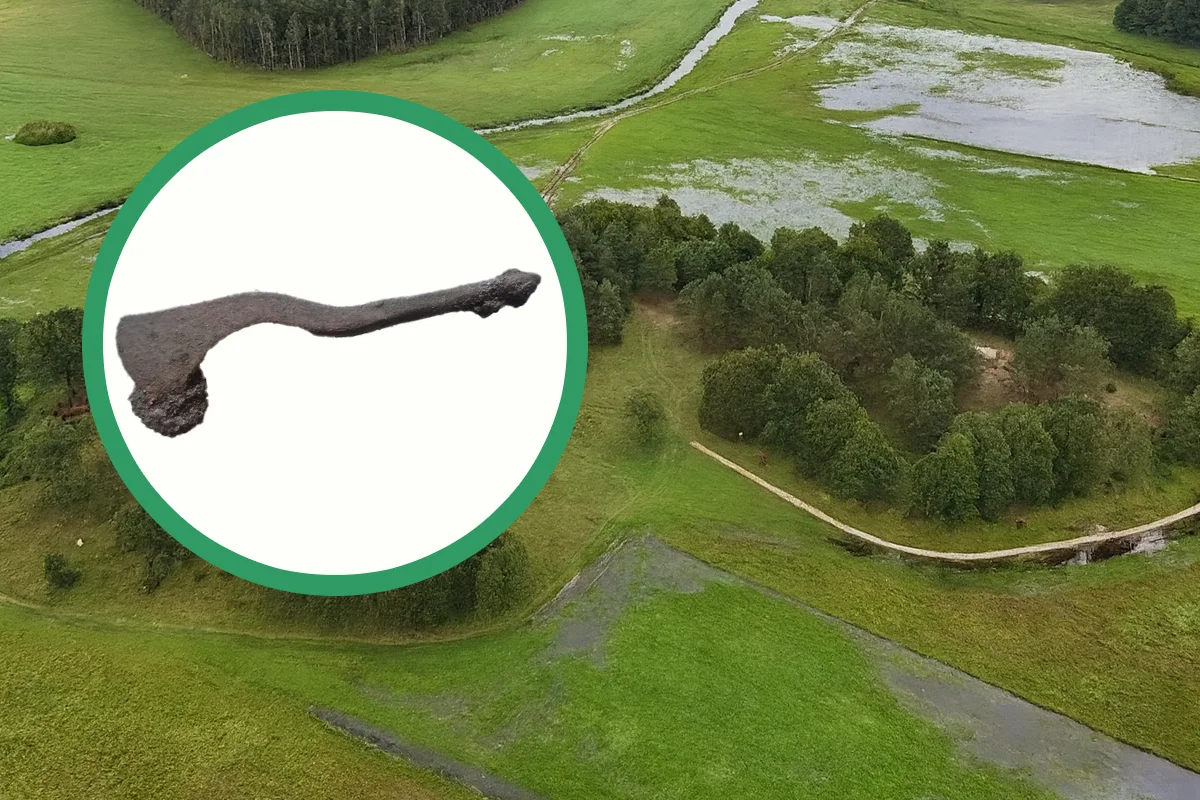
"boorinstrument voor trepanatie" of "schedelboortool" voor materiele of spirituele doeleienden?


Date:

https://www.heritagedaily.com/2025/10/celtic-skull-trepanation-tool-discovered-in-mazovia/156223?fbclid=IwY2xjawNwGeNleHRuA2FlbQIxMQABHiMHNSfT_xMUBTLmSk3uMJaQG2ygQrPdj8zJXRSYooCqo812A4j_MXHydR_Z_aem_ghjADfqnXxJrHYPOIgSwAw#google_vignette

Celtic skull trepanation tool discovered in Mazovia


Archaeologists have discovered a rare Celtic tool used for skull trepanation during excavations at the Łysa Góra site in Mazovia, Poland.

The discovery was made by archaeologists from the State Archaeological Museum in Warsaw, in cooperation with the Faculty of Archaeology at the University of Warsaw.

For two consecutive seasons, the team has been studying artefacts from a settlement linked to the Western Baltic Barrow Culture, where traces of Celtic influence are becoming increasingly apparent.

In previous years, the team made headlines with the discovery of a unique Celtic helmet from the 4th century BC, however, according to experts the trepanation tool is far more significant.

“Such instruments are known only from a few Celtic sites in southern and central Europe, including Romania, Croatia, and Austria. Finding one in Mazovia is an extraordinary rarity,” said Dr. Kaczyński.

At first, researchers were uncertain about the object’s function. Detailed comparisons with archaeological literature confirmed it to be a surgical scalpel, featuring a blade that transitions into a pointed spike, once mounted on a wooden handle.

This find suggests that among the Celts who passed through Łysa Góra was a figure versed in early medical practices, possibly a druid or healer, combining herbal knowledge with rudimentary surgical skills.

Excavations in the northeastern part of the site revealed traces of iron production, including cup-shaped slags and a small iron anvil used for metalworking.

“It seems the Celts who came here were accompanied by both a medic and a blacksmith,” noted Dr. Kaczyński. “Some of the small iron artifacts we discovered may have been produced on-site, crafted in the Celtic style.”

This season’s findings also include brooches, a spearhead, an iron axe, and numerous small objects associated with horse harnesses, such as buckles and bit straps.


runeteken Inguz in Boek van Armagh?!


Ierse oude betekenis en gebruiken van Halloween volgens Seán Ó Duinn


zie  Seans mooie verhaallijn: 

'Heim -Zoekers' die Tukkers maar hebben ze het werkelijk gevonden?


LEEFT DE OUDSTE STAM VAN EUROPA IN TWENTE?

Het land van de Tukkers en…de Tubanti

https://www.visittwente.nl/over-twente/tubanti/?fbclid=IwY2xjawNv-NNleHRuA2FlbQIxMQBicmlkETE4NkhzSDdqYnlxaVNpQkhPAR6hrWZJz_EEQ5WalJzRQYdqT8SKRpLcLqYoSXCeXinlIUXd_FmEdp2Zg3VjTQ_aem_Xl3J9h5NKDcXr09z8DJpDQ


Gemoedelijk, gastvrij, nuchter, rebels, een tikkeltje eigenzinnig, trots op tradities en gek op de geboortegrond. Zo ervaren bezoekers de moderne Tukker. Laten dat nou precies de eigenschappen zijn van de Tubanti. De wat? De Tubanti! Een Germaans volk dat al rond het begin van de jaartelling in deze regio woonde. Aan het karakter van de inwoners is sinds die tijd blijkbaar weinig veranderd. Leeft in deze regio de oudste stam van Europa? Het zou zomaar kunnen.

Loop je de Tankenberg op, dan wandel je ongemerkt het verleden binnen. Als de lucht verhalen kon vertellen, luisterde je op deze magische plek urenlang naar opwindende avonturen. De historie proef je rond het koepeltje op de top. Op deze unieke locatie komen 28 leylijnen – energiebanen – bij elkaar. Veel mensen, ja zelfs nuchtere Tukkers, voelen hier ‘dingen’. Maar misschien heeft het fantastische uitzicht op hun Twentse land daar ook wel mee te maken…

Op de koepel verwijst een spreuk van de Romeinse geschiedschrijver Tacitus naar de verwoesting van een tempel. De Romeinen zouden, ergens in het jaar 14, het heiligdom voor de Germaanse vruchtbaarheidsgodin Tanfana hebben vernield. Als vergelding op de Varusslag in het Teutoburgerwald, waarbij Germaanse stammen als echte noabers de Romeinen versloegen. Kijk de Netflix-serie Barbarians als je meer over dit verhaal wilt weten.

Vrouwen vereerd

Of de tempel van Tanfana echt op de Tankenberg stond, is nog in onderzoek. Zeker is dat de Twentse heuvel altijd een belangrijke rol speelde. Net zoals vrouwen trouwens. De Tubanti vereerden godinnen. Dat vonden de Romeinen met al hun stoere Goden maar vreemd. Voor Tukkers waren emancipatie en gelijkheid toen blijkbaar al heel normaal.

Gastvrij en gemoedelijk

Tacitus beschrijft de Tubanti als een gemoedelijk volkje zolang je van hun grond afblijft. De stamleden trokken er graag op uit, maar keerden altijd weer terug naar hun geliefde land. “Dat zien we nog steeds…”, zegt gebiedsmanager Evelien Meijer van Twente Marketing. “Tukkers, of ze nou wel of niet in de regio wonen, hebben een hechte band met Twente. Ze zijn gastvrij en gemoedelijk, maar kom niet aan hun land en al helemaal niet aan hun vrijheid.”

Stronteigenwijs

Dik kans dus dat de Tubanti van vroeger de Tukkers van tegenwoordig zijn. Willy Berends weet dat eigenlijk wel zeker. Hij laat in zijn boek ‘De Laatste Stam’ de overeenkomsten zien . “Een oeroud volkje waarvan je wel moet gaan houden: ze zijn stronteigenwijs, ze drinken graag een biertje, ze doen geen vlieg kwaad, ze knikken ‘Joa, Joa’ als ze nee bedoelen en kunnen soms heel grappig uit de hoek komen”, beschrijft hij de moderne Tubant. Goed volk dus. Toeristen weten er alles van.

Twentse tradities

Berends benoemt ook Twentse tradities die regelrecht uit het Tubanti-verleden stammen. Nergens in Nederland branden zoveel paasvuren en klinken zoveel midwinterhoorns. En wie een beetje oplet, ziet offerstenen, geheimzinnige teksten, altaarstenen en mystieke plekken die verwijzen naar de geschiedenis van de Tubanti. Om over alle sportverenigingen, straten, clubs en kranten met namen als Tubantia, Tubanters en Tubanten maar te zwijgen.

Link met textielindustrie

En dan is er nog een mogelijke link met de Twentse textielindustrie. Misschien gaven de Tubanti de eerste aanzet tot de bedrijfstak waaraan deze regio zoveel dankt. De stamleden verbouwden vlas en maakten daarmee blijkbaar ook kleding van hoge kwaliteit. In de vorige eeuw dook een vijfhonderd jaar oude jurk op. Die was zo fijn geweven dat zelfs de meest moderne Twentse textielfabriek de stof niet kon namaken. Wellicht gaat de link tussen Tukkers en textiel dus al veel langer terug, dan we tot nu toe vermoedden.

Goed bewaard

Ondanks alle bijzondere verhalen zijn de Tubanti relatief onbekend. “Als echte Tukkers hebben we deze geschiedenis goed bewaard gehouden…”, glimlacht Evelien Meijer. “Maar zelfs in Twente weten veel Tukkers heel weinig van de Tubanti. Best vreemd, want deze historie vormt een belangrijk onderdeel van onze identiteit. Daar mogen we best trots op zijn. Als Twente Marketing gaan we daarom deze verhalen samen met gemeenten, tourist info’s, culturele instanties en ondernemers meer zichtbaar maken. En er valt nog veel te ontdekken: we kennen nog lang niet alle geheimen van dit meeslepende verhaal.”